It’s common to feel uncertain when recommended for a significant dental procedure. Our mission is to provide clinical clarity. Before you commit, learn the signs of necessity and consult with an independent dentist to ensure your treatment plan is right for you.
The Growing Uncertainty Around Deep Cleaning Teeth Many patients search for information on deep cleaning teeth because they feel caught off guard by a sudden, expensive diagnosis. In the dental world, this procedure (Scaling and Root Planing) is vital for treating gum disease, but it is also one of the most frequently over-diagnosed treatments. Without an independent look at your X-rays and pocket depths, it’s nearly impossible to know if you are receiving necessary care or an unnecessary upsell.
An independent path to dental certainty
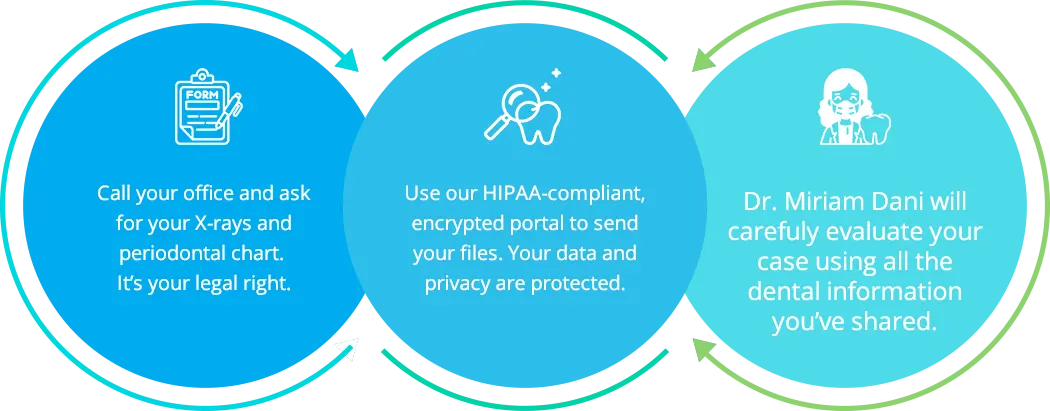
We’ve created a clinical “safety net” for patients facing a deep cleaning teeth recommendation. By providing a secure platform to share your dental records with board-certified dentists who do not perform the treatment themselves, we eliminate the conflict of interest. Our only goal is to review the evidence and tell you the truth: do you truly need a deep cleaning, or is there a more conservative, cost-effective path forward?
The 4mm Rule: Understanding clinical standards for your gums
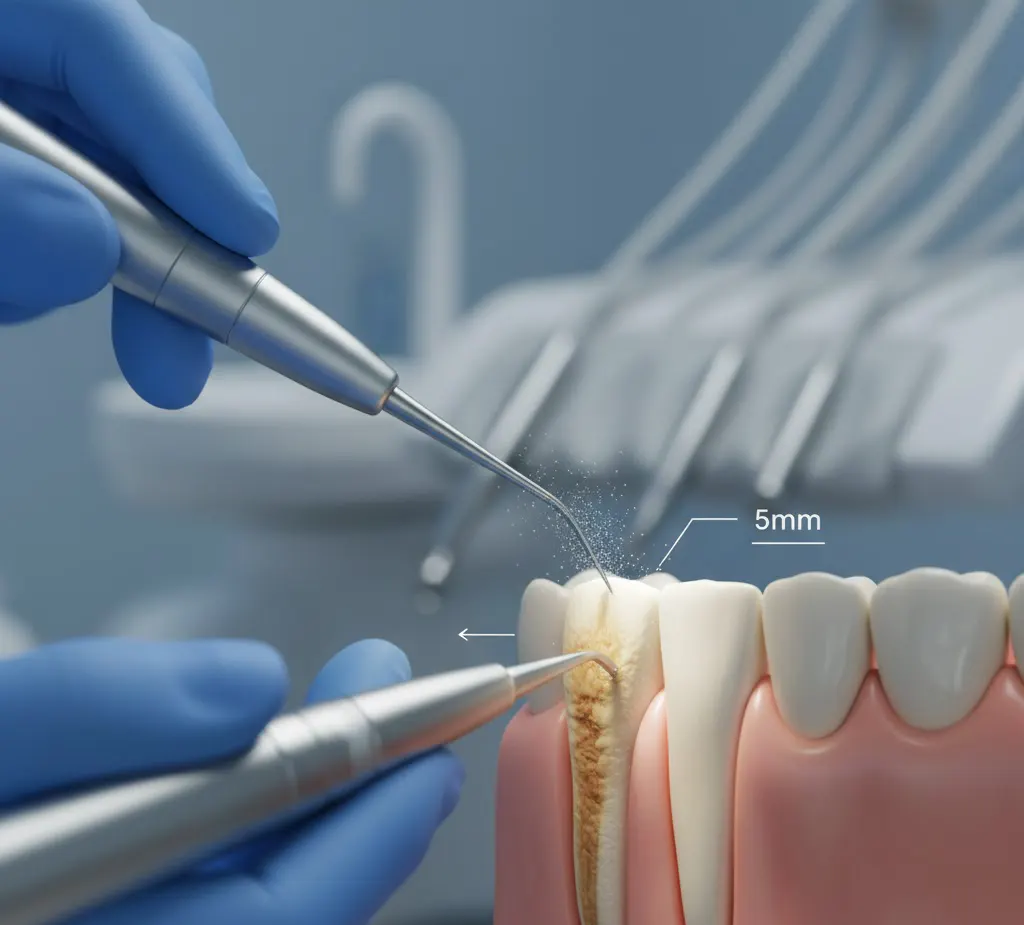
In the dental profession, clinical standards are used to determine the health of your supporting bone and gum tissue. The most common diagnostic tool is the “periodontal probe,” which measures the space (or pocket) between your tooth and the gum line. Understanding these measurements is the first step in deciding if a deep cleaning for teeth is the right path for you.
When is a deep cleaning for teeth actually necessary?
🦷 1–3mm (Healthy): Pockets in this range are considered healthy and easily maintainable with standard professional cleanings and daily flossing.
🦷 4mm (The Warning Zone): A 4mm pocket is often the threshold. While it may indicate early gingivitis, it does not always require a full deep cleaning unless accompanied by active bleeding or bone loss on an X-ray.
🦷 5mm+ (Active Disease): Pockets of 5mm or deeper generally indicate periodontitis. At this stage, a deep cleaning for teeth (Scaling and Root Planing) is usually the standard of care to prevent tooth loss.
Know your numbers before you commit
If your dentist recommended a deep cleaning for teeth but your pocket depths were primarily 3mm or 4mm, you may have more conservative, less invasive treatment options available.
Our independent case reviews focus on these exact measurements to ensure your treatment plan matches your clinical reality—not a sales goal.
What our users are saying
“I was extremely hesitant about the $2,000 estimate I received for a full-mouth deep cleaning. For a small fraction of that cost, the independent dentist here reviewed my X-rays and confirmed I only needed a localized cleaning in one small area. I saved over $1,200 and finally felt confident that I wasn’t being over-treated. It’s the best dental decision I’ve ever made.”